Tuesday, May 24, 2011
Always a Bridesmaid, Never a Feminist
This summary is not available. Please
click here to view the post.

Monday, May 16, 2011
Poor Life Choices
 Lately I have been thinking about graduate education in the humanities. Perhaps it would be a bit extreme to say that I have been having a moral crisis. Like St. Thomas, though, I sometimes have my doubts.
It’s not that I give credence to right-wing attacks on humanities research. Nothing drives me up the wall more than to switch on some local news story about an illiterate state legislator claiming that the humanities are irrelevant and a waste of tax payer money. I have written here and elsewhere about how critical an engagement with the humanities is for an informed and responsible citizenry, mostly to keep them from electing illiterate state legislators. Ethnic studies research also has a critical role to play as the nation’s demographics continue to shift. Ironically (in an Alanis Morrisette sorta way) it is at the very moment that companies and government agencies are desperate for individuals who can intelligently engage with minority communities, especially Latinos, that many universities are slashing their ethnic studies programs. I am looking at you, University of Texas system.

My concerns about graduate studies in the humanities are a bit more pragmatic. I have wondered about the wisdom of churning out armies of Ph.D.’s when the opportunity to land a traditional tenure–track position is becoming more and more remote. "I saw the best minds of my generation destroyed by madness, starving hysterical naked" or something . . .
Do we have any ethical obligation to resist the temptation to admit graduate students when we know this to be the case? How do we balance that obligation with an equal investment in insuring that new research on critical topics like race, gender, sexuality, class, disability studies and other fields moves forward?
Sadly, I have no answers to these questions. Instead, I can only think about the type of advice that I would give to newly admitted Ph.D. students in the Social Sciences or the Humanities. Hopefully you already received some clear-cut guidance before you applied to these programs. If not, here are some things to consider as you start a new program. It might be harsh, but it’s only because I love you.
- 1. Do not expect to get an academic job. Surely I can’t be the first person to mention that the academic job market is beyond miserable. A few very lucky folks land a coveted tenure-track position, but then a few lucky folks also win the lottery. Many others are placed into some mighty abysmal working arrangements as part of the adjunct machine. Universities and colleges, regrettably, know that they can acquire cheap labor and offer no guarantees because there is a surplus of Ph.D.’s on the market. Only you can decide if you want to work those long hours for minimal pay (and probably do without health benefits). It seems wiser, though, to prepare yourself to walk away from the t-t market. Consider obtaining an advanced degree as the opportunity itself. You have six years (or so) to really delve into topics that interest you. That is a luxury that can be enjoyed on its own.
2. Learn to combat feelings of being an intellectual imposter. If you find yourself feeling like everybody around you is a bit smarter or has read more, don’t worry. They are all thinking the exact same thing. I won’t deny that admissions to a graduate program depends upon a range of subjective criteria. Nonetheless, you would be surprised by the level of consensus that usually forms around candidates during admissions. This means that you should rest assured that you are just as bright and capable as any other student in the program.

3. Learn to combat feelings of being an intellectual superior. This is the flip side of number two. Indeed, many students vacillate between these two extremes. Graduate school can turn you downright bipolar. You have talents, to be sure, but they do not surpass those around you. It has seemed to me that once graduate students go down the path of hyper-ego their minds close faster than a vegan restaurant in Texas.
4. Use the gentle cycle on the washing machine. Have you looked at your stipend recently? You better make your existing wardrobe last because there are no trips to the mall in your future. It’s either that or join a nudist colony by your fifth year.

5. Remember that being a graduate student is a remarkably privileged position. This might seem hard to imagine given the brutal hours that you spend toiling away in the library. Nonetheless, you are now part of a tiny educated elite in this country whatever your economic or social class prior to admission. Estimates suggest that only 3 percent of the nation’s population holds a Ph.D. There are many mighty smart people who would have jumped at the chance to continue their education, but circumstances prevented it. This isn’t to say that the stress you feel is not real or that institutions can’t do better. Still, remember that you aren’t exactly shoveling coal for a living either.
6. Avoid having sex with faculty members in your department/immediate field. In my time, I have been propositioned by faculty who outranked me and also by graduate students. I don’t mention this to make claims about my innate hotness (Although . . .), rather it is to suggest that such things are a common turn of events in the academic world. It seems to me if you are a woman or a gay man, your chances of fielding unexpected/unwanted advances are pretty high. For some gay men, it’s how they say hello.

It might also be the case that you are occasionally dazzled by a faculty member who really pushes your buttons. Never, though, does it seem like a particularly good idea when there is such an obvious difference in power. Coming up with polite ways to decline is your best option.
Feel free to have sex with faculty members in departments far removed from your own. If you are in the humanities, there is no reason not to take a tumble with somebody in civil engineering should the mood and opportunity appear. I’m not sayin’, I’m just sayin’.
7. Learn the metric system. Okay, this doesn't really have much to do with your success in the program. Still, it's embarrassing that the U.S. is far behind on converting to metric.
8. Summers are not vacations. Take a poll of your department’s junior faculty and find out how they spent their summer months. Chances are you will hear things like “researching,” “writing,” “visiting archives,” or “field work.” If you hear the word “vacation,” generally it means they have dragged their significant other along with them in a simple attempt to appease them. “Yeah, I really needed to spend some serious time at the Iowa State Archive,” one might say, “so I took my husband and we made a vacation out of it! I don’t care what they say, Des Moines has lots of summer surprises.” By “vacation,” they really mean that their spouse got to spend time with them late at night and on the weekends when the archives closed. The spouse’s “surprise” was that they found themselves being a dedicated xerox operator the rest of the time.
This is a window into the life of an academic, especially one who is early in hir career. The demands of the regular academic year generally permit only scattered time to focus on a research agenda. Summers become precious opportunities to really bare down and work. If you plan to spend the four months lounging around a pool without cracking an academic journal or book, save yourself some heartache and drop out of graduate school now.

9. Tend to your personal life. Sacrifices will inevitably have to be made, but try not to let grad school take complete control of your life. Have plans to get married? No reason not to do so. I mean, you’ll still end up divorced eventually, so why not get the clock running now? At least this way you’ll still be relatively young when your first marriage goes south. Want children? Go for it (Although, as always, I would suggest that one think carefully about the larger environmental implications of producing another weapon of massive consumption). Don’t have a family plan? Rather frequent bathhouses? As long as you have an endless supply of condoms, I say make it a weekly ritual if that’s your thing. In other words, there is really not a reason to delay doing other things simply for graduate school. This doesn’t mean that you don’t still need to do the actual work, but I haven’t seen any reward come to those who put off their personal life.

10. Keep an eye on the liquor consumption. It’s hardly an original story when one turns to gin when feeling a bit stressed out. I am not a teetotaler (trust me), but it is always well worth thinking about how much liquor you consume. Avoid the binges or drinking every day. Besides, it’s an expensive habit and that money could go to other extravagances – like protein. An ideal scholar ends up with a classroom building named after hir; a less than ideal scholar ends up with the boardroom at Tanqueray named after hir.

11. Come to terms with the fact that you will not likely live in Los Angeles, San Francisco, New York, Chicago, Boston, or another of the nation’s great cities. Back in the nineteenth century, when most of this nation’s universities started, popular thinking associated cities with vice, pollution, and unhealthy living. To insure that young adults remained morally and physically in shape, the logic went, universities needed to be as far away from urban areas as possible. Better that they hang out with the cows. That was before the nation faced the epidemic of bovine gangs. Personally, I blame the alfalfa black-market.

Now we reap the legacy of nineteenth-century discourse as most of us in the academic world live in small towns rather than metropolises. This, I think, is one of the hardest things that we have to come to terms with for this job, especially if you’re gay (where the number of other gay people is necessarily going to be quite small). I have no solution to offer, which is probably why Tanqueray named that boardroom after me.
12. Learn how to communicate your ideas to a wide audience. There are good reasons to delve deeply into a particular subfield or methodology. Nonetheless, you’ll be taking your dissertation on a road tour before you know it. If you find yourself at conferences getting asked questions about your main argument (or, worse, not getting asked any questions at all), it’s not the audience’s problem. You have to know how to pitch things in a way that is approachable from a wider range of disciplines.
Keep your chin up. In the end, graduate school is mostly about sticking through it.
Monday, April 25, 2011
Missing Minority
 Those of you who have followed the slow release of data from the Census Bureau (and who hasn’t!) know that the nation’s demographics have shifted considerably over the past ten years. The Midwest, once the metaphorical and population “center” of the nation, is hemorrhaging people faster than Sarah Palin’s campaign team. Part of that change, of course, is the combination of Midwestern urban decay, failing infrastructure (Why pay taxes?), and mass relocations to "sunbelt" areas in the southwest. Another contributing factor, though, is the rapid growth of Latino populations in the border states. Census officials estimated that there were 45.5 million Latinos and Latinas in the United States as of 2009. This represents an almost 29 percent increase from the 2000 Census report of 35.3 million Latino/as.
What has surprised me is that our national entertainment industry has been remarkably slow to reflect this new reality. Latina/os might be the largest minority, but you would be hard pressed to find substantial representations on either broadcast or cable television. Some networks, including Oprah’s OWN, Lifetime, or FX, have zero (0) recurring Latino characters or hosts in all of their 24/7 programming. Those that do exist on other networks are sadly retreads of some pretty worn out stereotypes. Latinos remain relegated to the supporting cast. This is true despite the fact that various corporations have become increasingly hungry to grab a slice of the Latino economic pie.

It strikes me that the most visible characters currently on the air are Latinas. Yet, this is not necessarily good news. Two major roles define the options for Latinas on television: the sex bomb and the steely enforcer. The first has deep roots in this country. Since way back in the nineteenth century, mainstream representations of Latinas have most often presented them as tempting “tamales” who turn out to be “too hot to handle.” Latina women became convenient metaphors that legitimated multiple racialized assumptions as the U.S. contemplated war with its neighboring republic. Latinas were construed as always sexually available to Euro American men even as they were simultaneously presented as duplicitous, scheming, and dangerous. Euro-American travel writers first circulated these types of images to suggest that "immoral" Mexico needed a U.S. invasion to satisfy God’s supposed plan of manifest destiny (You can read about this and many other fascinating elements of nineteenth-century Chicano history when you purchase a copy of NERPoD from a fine on-line book retailer near you).
Such images live on in the conniving and fickle character played by Eva Longoria on Desperate Housewives; Colombian-born Sofía Vergara’s “trophy wife” role on Modern Family; and even Naya Rivera’s role on Glee. The last character, Santana López, hits many of the hallmarks of the stereotype. López uses her sexuality, often presented as irresistible to the white men around her, to satisfy her ambitions or as part of a larger scheme. At the same time, she can be depended upon to enact the “loca” traits that make her untamable. Quick tempered and cruel, López shows she is always ready for a fight. This includes a recent episode where she claimed to have razor blades hidden throughout her hair (!). Perhaps the revelation of her same-sex love interest will redeem this character, or at least steer her from being a twenty-first century incarnation of “wicked Felina.”

Another less noticed, but still identifiably stereotypical role, appears in the police-procedure genre. Many shows, like Law and Order, Eureka, or the doomed Detroit 187 feature the tough Latina enforcer. While I can’t say for sure, it seems like this version of Latina can find some of its roots in Aliens (1982). That film introduced the memorable character Private Jeanette Vásquez, a tough-as-nails marine. Here was a Latina character who got to do things on screen that had previously been reserved almost exclusively for men, including handling some really big guns. She also met her demise memorably in an altruistic blaze of fire, ultimately hugging a grenade rather than being taken by the titular aliens. Reportedly, the Vásquez character left such an impression on Gene Rodenberry that he intended the security officer on Star Trek: The Next Generation to be a comparable Latina figure (which was later dropped when he cast blond Denise Crosby for the role, contributing to Star Trek’s long history of failing to include Latino/as in the future – but that is another entry).

What I call the “Vásquez type” presents Latinas as figures who bend traditional gender conformity through their military/police skills. They are often presented as invaluable to the white leads in solving crimes, battling aliens, or generally kicking ass. They know their way around a gun, wear their hair in a sensible bob or poneytail, and can more than handle themselves in battle. All of that is nice . . . but these Latina figures are also always ancillary to the main white characters. If they provide the muscle, than it is up to their white (usually male) partner to provide the problem solving skills which truly stops the criminals/aliens/mayhem. Representations of their personal lives range from non-existent to deeply troubled. While generally I appreciate their rejection of gender conformity, it can nonetheless becomes a racial marker that only serves to highlight the more authentic masculinity of the (white) male lead and/or the more alluring femininity of the (white) women around them. Latinas become characters who have not quite mastered the mainstream gender rules, and therefore remain outside of society.
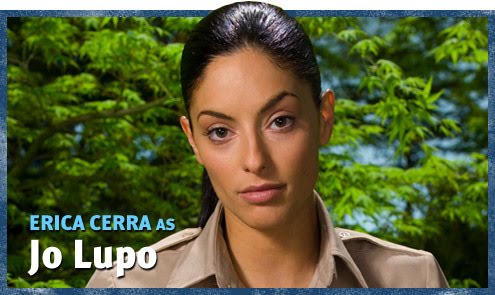
Keep in mind that those are the most positive options currently seen on television. Most of the time, television networks prefer to imagine that Latinos don’t exist at all. Even shows set in geographic areas with significant Latino populations manage to sideline those inhabitants or simply turn them into background “color” that spices up the main white characters’ lives. As I have talked about elsewhere, the USA show Burn Notice takes place in Miami but manages to only grant roles for Cubans as either victims (usually women) or as villains (either men or women). Whatever the case, both are easily dispatched after one episode.
For obvious reasons, I am the most sensitive about this phenomena when programs are set in New Mexico. My home state, as everybody knows, has always had a non-white majority population. Recently, the census bureau also revealed that Latinos are now the largest ethnic group in the land of enchantment. Making a show set in New Mexico without showing Latinos is like making a show set in Washington, D.C. without showing idiots. Nonetheless, that is exactly what happens in USA’s In Plain Sight or the critically acclaimed AMC show Breaking Bad. The first, which centers of the blond lead, has a token Latino character who is a Dominican baseball player. Apparently the USA network could only imagine Latinos as recent immigrants, thereby ignoring the Latinos actually residing in the state whose families have been there for generations.
Breaking Bad, also set in Albuquerque, does little better. Like in Burn Notice, Latinos zest up the drab background by providing Spanish-language music, low-rider cars, or colorful expressions. When they aren't providing the literal and metaphorical salsa, they appear as threats to the main white leads. These roles as side characters serve to contrast the normalcy of the two middle-class white characters. Latinos, as dangerous drug dealers, represent an upending of the “quiet” life of the white school teacher and his former student. The series lead, we are told, had no choice but to enter the drug underground. He begins manufacturing meth in a noble attempt to provide for his family after his imminent death from cancer. Latino drug dealers, on the other hand, are shown to be motivated only by greed and violence with few redeeming characteristics. They are almost always recent arrivals in the country.

I am disappointed that television programming has failed to understand or represent the variety of Latino/a experiences in the United States. This is even more troubling when we consider that many (most?) of the nation’s other citizens probably depend on television as the only venue through which they get to know the United States' largest minority. For the most part, it seems that television executives consider Latinos too much of a political hot potato to represent fairly. When they do make an appearance, they enforce the notion that Latinos (and a multi-cultural society in general) threatens to upend the national status quo through their supposedly hyper sexuality and unquenchable thirst for violence.
Some of this might change when media monopoly Comcast launches its new English-language Latino network in 2012. I’m not holding my breath, though.
Thursday, March 31, 2011
The Detective
 Some evenings ago, I had finished with a hard day of accomplishing nothing on NERPoD: The Sequel (Which reminds me, have you ordered your copy of the original NERPoD from your favorite on-line bookseller? All the really cool bloggers have already read it. Why haven’t you?). This meant that I needed some form of entertainment to distract me. My mindless channel surfing stopped at the start of The Detective (1968). Now here was a film that would allow a lot of self-justification for watching the idiot box. I knew of this film from Vito Russo’s classic Celluloid Closet (and the later HBO documentary of the same name), but had never watched it in its entirety. Parking on the couch to watch this wasn’t me blowing off the evening. Rather, I was assessing a critical primary source that would shed light on past notions of sexual difference. Hey, it’s tough work, but somebody has to do it.
 For those who have never heard of The Detective (and I’m going to guess most people have not), it was one of the first explicit representations of gay men at the local picture palaces. The year 1968 had brought significant changes and challenges to the nation. The Civil Rights movement was dealt a serious blow by the death of Martin Luther King, Jr; LBJ served his last year in office; Pierre Trudeau became Canada’s Prime Minister; Andy Warhol got in the way of radical feminist Valerie Solanas’ bullets; and Hawaii Five-O premiered on television (for the first time). That last one alone sent many people into an existential crisis from which they never recovered.
The year 1968 also brought an end to the draconian censorship of the Movie Production Code. Moviegoers demanded that films start reflecting the bleak and turbulent times. In place of the censorship Code, which sought to keep everything squeaky clean for all audiences, films started having a letter rating (G, PG, R, and X) that parents could totally ignore when considering which films were appropriate for their families.
Twentieth Century Fox rode that new rating train all the way to the bank with their highest grossing picture that year, The Detective. None other than Frank Sinatra occupied the titular role. The movie, based on a novel by Roger Thorpe (the man who later brought you Die Hard (more or less)), included topics like marital infidelity, corruption, civil rights movements, anonymous sex, and, of course, homosexuality. They probably couldn’t have included any more salacious story lines unless they made it a flat-out porno.

The start of the film lets us know that this ain’t no Doris Day flick. New York Detective Joe Leland (ol’ blue eyes) arrives at a crime scene. Upon entering the upscale apartment, he casually observes that the victim was a “male Caucasian, nude laying on the floor. Penis cut off, laying on the floor of the living room.” Leland’s partner, a novice African-American policeman, nearly hurls his cookies onto the floor. In contrast, Leland has seen it all and casually asks Quincy, or, er, Jack Klugman to wrap up the penis in newspaper to keep people from accidentally kicking it around the floor.

The audience is left asking, who could have perpetuated such a gruesome crime? Well, it was a number of years too early for people to imagine that Bobbit story.
We start to get clues about what might have transpired as Leland tours the deceased’s apartment: Nude, greco-roman male statutes in every corner? Check. Unknown drugs in the medicine cabinet? Check. Semen stained sheets? Check. A pile of barbells and a half-gallon jug of mineral oil? Check and check! Even Scooby-Doo could have pieced together that this man was as queer as Fred’s ascot. The Detective is that subtle.
But this was post code! No longer did movie makers need to hint broadly about the sexual identity of its dead characters through objets d`art. The Detective spelled it out plain and cold: “Junior over there was a homosexual” remarks the medical examiner. Just how the doctor determined this posthumously is never revealed, but he assures Leland such an end is typical for men of his persuasion. When asked about the cause of death, he glibly replies “Lover’s quarrel, that’s how they settle it.. . . Twenty years and they still disturb the hell out of me.” Who can blame him? Most of my man dates usually follow the trajectory of drinks; then dinner; then a movie; then sex (possibly slathered in mineral oil); and then a bloody death match on the livingroom floor. If I come out alive and with my member intact, I hope he calls me again.

One doesn’t need an extra eye to see the homophobia dripping out of the film. It is for this reason that The Detective has been rightly disparaged by generations of queer scholars and moviegoers. The film makers promised, and delivered, the first celluloid glimpse at “gay” life. Following the chairman-of-the-board through his investigation gave a voyeuristic glimpse at all the joints that gay men apparently inhabited: gyms, boarding houses, the docks, and orgies in semi-trucks. Or, as I think of it, Tuesday. Each time they encounter a gay person, an ancillary character comments on how “sickening” it is to normal men like him.
To make a long, convoluted story shorter, Nancy Sinatra's father thinks that he finds his man, Felix Tesla, at a sketchy boarding house. The suspect fits with what sixties mainstream society imagined for gay men. In other words, he was totally drugged out . . . or nuts . . . or both. It didn’t really matter. Listening to his contorted speech patterns, it’s hard to believe this man was lucid enough to ride a city bus much less have an extended relationship with a prominent millionaire. But, whatev’s.
Tesla arrives at the police station for intensive interrogation, which does result in some of my favorite campy movie dialog ever. When questioned about life with the victim, Tesla proclaims, “He was a bitch!” Oh, honey, I’ve been there. The rest of the scene played out more peculiarly as Frank Sinatra more-or-less seduces his suspect. A gentle touch here, an oblique reference to a gay bar there, questions about the victim’s body (“soft, like a girl’s” btw).
 Before you can say “police coercion” Leland has his suspect singing like Billie Holiday. You can guess what happens next. Yep, the gay man goes immediately to the electric chair and fries faster than a bucket of chicken. All the cops and politicians are delighted. The detective wins a big promotion and everybody enjoys some stiff brown drinks. A happy ending in heteroville. Well, except . . .
Turns out maybe Tesla wasn’t so guilty after all. Through an unrelated investigation, the detective discovers that another man has jumped to his death at a local race track. The newly deceased? A closeted gay man who had been involved in some mighty shady deals in the city. Apparently the director couldn’t let a full twenty minutes of celluloid lapse without having a gay man facing some type of peril: dismembered, strangled, beaten up, threatened with a gun, threatened with imprisonment, electrocuted, or just clumsy on a ledge. Like all gay men, The Detective lets us know that the most recently departed deserved his fate. He helped a crew of politicians and real estate brokers embezzle millions of dollars, all at the expense of the poor. Yet, this was not what set him over the edge, literally. He just couldn’t handle his deep, deep desire for some man love. I mean, committing outrageous acts of fraud and theft are one thing, but kissing another man? Somebody has to die.
Leland uncovers a taped confession that outlines the closeted man’s torment. Oh, you know the type. He had “experimented” in college, but since then had become 100 percent heterosexual. Think an accountant version of Ted Haggard. To prove his new found straightness, he even married the glamorous Jacqueline Bisset. Hey, if you’re going to get a beard, go top of the line is what I say. Trouble was that sometimes he just needed somebody in bed who was, shall we say, a bit more hairy. He turned up at a local gay bar and went home with the millionaire. And, as we were told early on, the inevitable happened when two gay men connect: murder. Sinatra emotes some remorse over turning Tesla into a human flambé, but not enough so that he can’t end with a sanctimonious speech about city corruption.

All in all, the movie leaves you with the impression that gay men are self-hating, drug addled, murderous embezzlers who keep the mineral oil industry afloat. Yet, in watching the film I was surprised to see that it also contained a (very modest) counter vision of gay men. The police contemptuously questioned the victim’s beard, or er, occasional “date” to parties. She defended the victim. “I knew he was gay," she said without apology, "but he was civilized and he a bit of wit, which is more than I can say for most people.” Though most of the police rough up the gay men whom they encounter at the docks, Leland reminds them to “take it easy. These people aren’t murderers.” Of course, that line would have been more convincing if the film hadn’t already presented gay men as only murderers. Later in the film, he tells Tesla “I believe in live and let live.” Of course, that line would have been more convincing if he didn’t later send Tesla to die in the electric chair.
Perhaps The Detective can be understood as exploiting the contradictory attitudes about sex and sexuality swirling around during the 1960s. On one hand, the film didn’t shy away from pointing out that gay men actually existed and were out having a good time. Well, at least until they died in some gruesome way. When they did die, it was usually their own fault or at each other’s hands. Those depictions of gay men, though, have to be placed into the larger context of the way the film presents other forms of sexual behavior. The Detective didn’t just delve into gay men as the only symbol of sixties sexual corruption. In an ancillary plot, Leland's own marriage falls apart when it’s revealed that his wife likes to have anonymous sex with strangers whom she meets at bars (Don’t ask). The increased sexual freedom of the era costs Leland personally and left him disillusioned.

Leland thereby comes off less as a crusader for social justice than as a libertarian who has himself been victimized by the sexual revolution. The film reassured audiences that good straight white men, like Leland, always fight for the less fortunate and provide stability in a world run amok. His mild defense of gay men served to make him appear more generous and “by-the-book,” unlike the crooked cops who surrounded him. He was a hetero patriarch that audiences were supposed to embrace. It ignored that such straight cops were often the ones harassing anybody who dared to break the social mores.
Monday, March 07, 2011
Baby Nation
 Given that I am a junior faculty member, I sometimes attend professional panels for career advice. Most often, the advice is fairly predictable (e.g. Publish, publish, publish; keep your c.v. updated; don’t sleep with your students; teach well, but don’t let it interfere with publishing; avoid unprofessional journals/presses that take 8 months to decide whether to even send out a piece for review; wear sensible shoes). What emerged during one such recent discussion among distinguished faculty left me gobsmacked. Yeah, that’s right. I used “gobsmacked” in a sentence. American slang just doesn’t have a good enough alternative. Or maybe I have been watching BBC America a wee bit too much.
 Whatever the case, there isn’t much that can surprise me about the academic world these days. Like the immortal character of Kelly Garett, I’ve been around. So you might imagine that it took me quite a bit aback when one of the male panelists charged with mentoring junior faculty suggested that the key to maintaining one’s balance and success in the academic realm was having children. He did not present this as one of a menu of options (i.e. “One needs to have focus on things beyond the job, like having children; or a series of romantic relationships; or a pet poodle; or building ships in a bottle.”). Nope, the key was children and the unnameable, but miraculous, power of parenthood to transform an individual to a higher plane of consciousness and zen clarity. Only then would you succeed.

Had he been a lone voice on the panel, it might have seemed a peculiar, but dismissible, comment. Astoundingly, though, the majority of the panel, a mixture of men and women, agreed enthusiastically with him. This was not a panel riddled with Christian fundamentalists. These were some mighty smart people who themselves write about issues of social difference. Yet, they saw few problems with promoting a pretty strict type of conformity (and, I would suggest, unrealistic expectations). Only two dissented with the parent agenda: One who agreed that children was a must for a happy life, but meekly suggested that waiting until after tenure might not be a terrible idea for some people. This left just one panelist who pointed out that: a) Not everybody wants children; b) Not everybody can have children; c) Having children (or not) has little, if anything, to do with the path to tenure or one’s professional identity.
To that, I would have added that such advice intentionally ignores the very serious work and time that parenting requires. It keeps in place the myth that being a parent is all reward and no sacrifice. Or, if there is sacrifice, one hardly notices it. Those who might suggest that parenting is often unrewarded drudgery might as well say that they keep their kids locked in the basement.
The panelists’ advice also veiled the reality that women remain disproportionately responsible for childcare in most households. For junior faculty, it is likely that women's careers will be more impacted than their male counterparts. Looking from the far (FAR) outside, it seems to me that even suggesting that becoming a parent would somehow ease the burdens of a tenure-track career is more than slightly disingenuous. It is a lie.
Finally, this advice is riddled with a particular brand of heterosexist privilege. Let’s pretend that I, GayProf, actually desired a human worm larvae of my own (Which I don’t – Trust me). The chances of me having a baby via sex are pretty slim (but that doesn’t mean I am not willing to keep on trying!). The effort that I would need to expend to obtain said larvae would far exceed all the sweat that went into NERPoD (Currently available for purchase at any of your favorite on-line book stores). States like Arkansas, Utah, and Mississippi even make it illegal or nearly impossible for gay men to adopt, no matter how much money they throw into the system. Along the same lines, many heterosexual couples are unable to have biological children for a variety of reasons. For them, hearing that children is a must for maintaining one’s sanity in the academic profession could only be construed as coming from a source of parental privilege.
This emphasis on parenting occurs despite the economic recession/depression, global hunger, and environmental strain. Rarely do I see any call for U.S. citizens to consider the ethical implications of our parenting choices. Each new human born in the United States will consume 30 times more than a brand new human born in India and 20 times more than a new human in Africa. Given that our nation represents only 5 percent of the world’s population, but consumes 20 percent of its resources, it is hard not to imagine that some consider our nation as giving birth to weapons of massive consumption.

Is this to say that I would argue against having children while untenured? Not really. I actually don’t care. We are lucky to live in an era when becoming a parent is still a choice. I would say such choices should be weighed seriously and with an understanding about the local, national, and global costs of an excessive population. Moreover, if you are with a spouse (or two) who won’t put in equal effort towards the kid, you really should think again about whether you want those spouse(s) around.
This panel, though, reminded me how obsessive our society has become about parenting. It left me thinking that if a group of people who are otherwise committed to questions of social justice could/would generalize so easily, just what has happened that natalism has become the benchmark for an individual’s success? Not since the middle of the twentieth century has parenting become a defining element of one’s place in our society. Much like the 1950s, those who do not have children are imagined as pitiable, selfish, immature, bitter, or simply crazy. As a single gay man with no family plan, I have a problem with that. Moreover, since I spent the larger part of my childhood living in fear of one of my parents, I am not inclined to see the mere act of becoming a legal guardian as necessarily representing an enhancement of one’s moral being. As I have mentioned in other posts, I am disturbed by children’s lack of rights and the assumption that they basically “belong” to their parents.

The career panel was surprising because it was a formal event, but it is not the only place where I have heard such messages. Indeed, I have one colleague at Big Midwestern University whom I see fairly rarely (My department is quite massive). Nonetheless, the few conversations that I have had with him have always centered on his efforts to convince me that I need to have a child. Part of this, I think, is an ingrained tendency that we all have to want other people to make the same choices that we have made. The first conversation seemed fine. After the third, I made a direct statement that I had no desire for children. He nonetheless continued and assured me that I didn't really know what I wanted. While he is generally a nice guy, it started to feel a bit like harassment.
If a single gay man is getting this type of insistence, I can’t possibly imagine what women (of all sexualities) are facing. Unlike the 1970s, where a question might be about whether a woman wanted children, the question is now when a woman will want children. It seems to me that modern feminism has left unchecked the notion that women must be defined through their role within a family. This can be seen across our culture. Popular magazines and blogs obsess about famous women and whether they have a “baby bump.” The professional accomplishments of women actors and singers are sidelined once reporters develop a creepy fixation on the occupancy status of their uteruses. Their goals or success prior to pregnancy, we are told, were just illusions of happiness. Only babies make women truly happy!

Take, for example, the coverage of Oscar winner Natalie Portman. Before she even won the award, at least half of the coverage that I heard focused on her pregnancy rather than, you know, her hard work in the film Black Swan (Personally, I didn’t care for the film, but that is another entry entirely). Her professional identity was swept aside in ways that would never happen for a male actor who was at the same stage of having a child.

One of the problems, then, with the hyper investment in parenting is that it also threatens to return us to some pretty retrograde notions of gender and familial roles. Not only has parenting become compulsory for one’s place in the world, but the choices about parenting are also highly scrutinized and policed. Witness the recent kerfuffle over “Tiger Mommy.” Or ultraconservative Mike Huckabee's accusation that Portman "glamorized” unwed pregnancy. Responding to Portman’s statement that her fiancé had given her “the most wonderful gift [a baby],” Huckabee sputtered, “He didn't give her the most wonderful gift, which would be a wedding ring!” Portman apparently didn't realize that there is still a "natural" order to life when she skipped over that all important wedding.
Compulsory parenthood comes with seem pretty high costs it seems to me. My sexuality will always be at odds with a discourse that asserts that our best potential is realized through replicating ourselves. We should be leery of retuning to an era when biology was destiny and the patriarchal nuclear family reigned supreme.
Friday, December 17, 2010
Give It Up
 December is passing by rather quickly. While we all know that I celebrate the winter Lunar celebration for the goddess Diana (wink), others are preparing for the big C. Or the big H (sometimes also C). Or the big K. The pressures of finding the perfect gifts for your loved ones, traveling to see your loved ones, and then spending an ungodly amount of time with your loved ones is likely driving you all batty. It’s like GayProf always says, “Family: Can’t live with them, can’t shove them in a trunk and drive them over a cliff.”
As I prepare the invisible jet for my return to Paradise Island, I wanted to offer my annual help to the loyal legions who keep vigil in cyberspace. Allow me to be your guide as you navigate these gift giving rituals. There is still plenty of time to figure out just what type of message you want to send with your presents this year:
***
The Gift: A bottle of bourbon.
What the Giver Meant: You’re a drunken bastard.
What the Receiver Thinks: Give me, give me, give me.

***
The Gift: A hands-free infrared soap dispenser.
What the Giver Meant: You’re a dirty bastard
What the Receiver Thinks: Anal retentive much?
***
The Gift: A nativity set with characters from Star Trek, including Mr. Spock as Jesus.
What the Giver Meant: You’re a nerdy bastard.
What the Receiver Thinks: Maybe Shatner was right. Maybe I do need to get a life.
***
The Gift: An assortment of flavored hot chocolates.
What the Giver Meant: I want you to be warm and toasty in these cold winter nights.
What the Receiver Thinks: I’d rather have a bottle of bourbon.
***
The Gift: A year-long membership on Manhunt.com
What the Giver Meant: You're a horny bastard.
What the Receiver Thinks: I guess that I can use this if Grindr is ever down.

***
The Gift: A year-long membership to Match.com.
What the Giver Meant: You're a lonely bastard.
What the Receiver Thinks: I’d rather have a bottle of bourbon.
***
The Gift: A year-long membership to eHarmony.com.
What the Giver Meant: You're a creepy, Christian bastard.
What the Receiver Thinks: I don't need anybody in my life because my ability to smugly judge others keeps me warm through the night.
***
The Gift: A give away tax plan for the wealthy.
What the Giver Meant: I ignore the people who elected me in a futile effort to curry favor with the people who will forever hate me.
What the Receiver Thinks: I see we are still waiting on that spine donor.
***
The Gift: Mid-century modern ceramics
What the Giver Meant: I am a man of exceptional style and taste.
What the Receiver Thinks: Somebody has been watching Mad Men a bit too much.

***
The Gift: The DVD collection of Glee.
What the Giver Meant: You’re a gay bastard.
What the Receiver Thinks: I still have fantasies that high school could have been fun.

***
The Gift: The DVD collection of Modern Family.
What the Giver Meant: You like shows with non threatening Latina and/or gay characters who subtly conform to societal stereotypes.
What the Receiver Thinks: I enjoy the stifling suburban status quo.
***
The Gift: The DVD collection of Dallas.
What the Giver Meant: You’re an out-of-touch bastard.
What the Receiver Thinks: Why did the eighties have to end?
***
The Gift: A product made in the state of Arizona.
What the Giver Meant: I have no social conscience.
What the Receiver Thinks: I need better friends.

***
The Gift: A Dodge Challenger!
What the Giver Meant: It’s not like Chrysler is going to be around much longer.
What the Receiver Thinks: I have the best friends.

***
The Gift: A reclining chair with built-in massaging technology.
What the Giver Meant: You’re a lazy bastard.
What the Receiver Thinks: I wish it had come with a bedpan.
***
The Gift: Tea Party Paraphernalia.
What the Giver Meant: You're a crazy bastard.
What the Receiver Thinks: ? (When dealing with the crazed, your guess is as good as mine.)
***
The Gift: A copy of NERPoD.
What the Giver Meant: Somebody, somewhere, should read this thing.
What the Receiver Thinks: Was the bookstore out of Secret Historian?

***
The Gift: A humidifier and a tub of Vick’s vapor rub.
What the Giver Meant: You’re a sickly bastard.
What the Receiver Thinks: (Unable to receive gift because you are in bed).
***
The Gift: Your own blog.
What the Giver Meant: You’re a whining bastard. Now you can vent your spleen without me having to listen to it.
What the Receiver Thinks: This would have been interesting... Five years ago (Unless you are an academic, in which case you feel really hip having a blog).
***
The Gift: A wildly inappropriate airport screening procedure.
What the Giver Meant: Hey, if we make this a big enough dog and pony show nobody will notice that we blew an obscene amount of money on machines that will do nothing to make us safer.
What the Receiver Thinks: Basic human dignity was overrated.

***
The Gift: A gift card.
What the Giver Meant: You’re an impossible-to-shop-for bastard.
What the Receiver Thinks: You shouldn’t have gone to the trouble! Cash would have been just fine.
***
The Gift: A Wii entertainment center.
What the Giver Meant: You’re an adolescent bastard.
What the Receiver Thinks: We are so having a slumber party this weekend.
***
The Gift: An ipad.
What the Giver Meant: I am a slave to the Apple corporation and have confused capitalist brand identification with actual individuality.
What the Receiver Thinks: Here is an overpriced toy that will end up sitting in a drawer in six months.
***
The Gift: A window’s based PC tablet.
What the Giver Meant: I was too cheap to buy the ipad.
What the Receiver Thinks: Why is it on fire?
***
The Gift: An all expense paid trip to Madrid!
What the Giver Meant: The holidays are meant to be enjoyed.
What the Receiver Thinks: This is the best present, ever!

***
The Gift: A trip to see your family that you have to pay for yourself!
What the Giver Meant: The holidays are meant to be endured.
What the Receiver Thinks: Life is suffering.
***
The Gift: Diamonds!
What the Giver Meant: You’re a greedy bastard.
What the Receiver Thinks: Marilyn was right.

***
The Gift: A key holder disguised as a realistic rock.
What the Giver Meant: You’re a forgetful bastard.
What the Receiver Thinks: Where am I?
***
The Gift: A lava lamp.
What the Giver Meant: You’re a stoned bastard.
What the Receiver Thinks: Where am I?
***
The Gift: The soundtrack for Burlesque.
What the Giver Meant: You’re a campy bastard.
What the Receiver Thinks: I missed my calling as a Cher drag queen.
***
The Gift: The Clapper.
What the Giver Meant: You’re an old bastard.
What the Receiver Thinks: Well, I suppose it is better than the clap.
***
The Gift: A Tom and Jerry bowl with matching cups.
What the Giver Meant: You’re a weird bastard.
What the Receiver Thinks: Now my 1930s dish collection is complete!

***
The Gift: A three-month membership to a gym.
What the Giver Meant: You’re a fat bastard.
What the Receiver Thinks: You’re just a bastard.
Thursday, December 09, 2010
Center of Fabulous
 Remember that Part II of my discussion with VUBOQ can be found here. In this addition, VUBOQ shares his special holiday cocktail recipes. It's like blogging with Martha Stewart. Well, if Martha Stwart were a gay man. What am I saying? "If!"
 There is even more sequins, glitter, and Cher!
Wednesday, December 08, 2010
Inside the Blogging Studio with VUBOQ

Over the past five years, blogging has allowed me to meet some mighty cool people in real life. On that list is the ever effervescent VUBOQ (not to mention his superfantabulous cuzin who happens to be my superfantabulous neighbor). The time had come for us to sit down for a special holiday spectacular:
***
VUBOQ: As you all know, GayProf is Full of the Gravitas. However, I am lucky enough to know the GayProf in the Real Life (yay! You may all envy/worship me). And, since I know him in the Real Life, I know that he is not always Full of the Gravitas. Sometimes he is Full of the Light-Heartedness and Fun and, sometimes he can be a little bit silly (especially after a couple of bottles of red wine).
GayProf: Ugh – I was full of the Spanish red. Man, I still have a hangover from your visit.
VUBOQ: So, for this joint post, my goal is to show the rest of Blogtopia this side of the GayProf. We are going to discuss the fun, the frivolous, the sparkly, the glittery, and the tons of f**king sequins.
But, we are going to start with the Food (and the booze!) ...
I had the very good fortune to visit GayProf in Midwestern Funky Town recently (you may have read about it!). During that visit, he taught me and my superfantabulous cuzin how to make tamales. For those of you who don't know, GayProf is from New Mexico, which is not a foreign country (*cough* right *cough*). BUT, they do make foreign food ... like tamales! Normally, the tamales are made with the pork products. Such as pork. and lard. However, GayProf, knowing that I am vegetarian and have eschewed all meat, made his beloved tamales without the pieces of shredded and mutilated dead pig. Our tamales were made with Crisco© (*gasp*) and beans.
GayProf: I still can’t believe that I grew up believing that Crisco© was somehow a healthy alternative to lard. They lied to me! Lard is really the only way to go. It is the secret ingredient to all great Mexican cooking.
VUBOQ: Piglet (no matter how delicious he may be) did not die for our tamales. And they were YUMMERz. Really. Ask the GayProf's Sparkly Contingent of Gays who were at his little dinner party (we'll be discussing the place settings later ... trust me).
GayProf: You’re not going to mock my dishmania, are you?
VUBOQ: Never. I may playfully poke fun, though. Anyway, his willingness to cast aside his love for Cruelly Raised and Brutally Slaughtered Pigs just for my eating preference is yet another reason I totes *heart* the GayProf.

GayProf: It turns out that I was eager to try a tamale alternative to my usual (absurdly delicious) pork filled versions. Beans worked out pretty well. It does make me wonder, though, why Mexican food in general doesn’t get the respect it deserves. To my mind, it is one of the classic world cuisines: easily identifiable and supremely influential. Yet, the only time the mainstream media gives it any credit is if a white boy adopted it (i.e. Bobby Flay or Rick Balis).
VUBOQ: Which brings us to the main point of this section: VEGETARIAN COOKING. It really isn't that difficult. And modifying UberMeaty recipes into something a vegetarian can eat isn't that difficult. Right, GayProf?
GayProf: Vegetarian cooking is hell. It’s only because I adore you so that I even attempt it.

You see, I only know how to make basically six things. Five of them involve meat in some form or another. I was glad that the bean tamales turned out somewhat okay. Otherwise it would have been quiche forever.
VUBOQ: There is nothing wrong with the quiche. Real men eat it, I hear.
 GayProf: Don’t get me wrong, I admire the vegetarians (less so the vegans, who just take things too damn far (Hate mail for GayProf can be sent in care of VUBOQ at blogspot.com)). If I spend anytime thinking about the way animals suffer for our food, it makes me want to be a vegetarian. But, then I don’t think about it. La-la-la-la-la-la – Can’t hear you. I am pretty weak willed when it comes to meat, as it turns out.
Still, I’m not somebody who has to eat meat everyday. I am more than happy to have a basic bean burrito as my meal. Plus, I adore tofu. As I recall, somebody was supposed to give me a cooking lesson with tofu while he visited. **cough-cough**
It does remind me of those faux vegetarians we talked about while you were in MFT. I’ll do my best to accommodate guests who are really committed to vegetarianism (or who have similar religious convictions), but I have no patience for the people who are “vegetarian,” but make exceptions for seafood. What evidence is there that a tuna is somehow less likely to suffer pain and panic than a chicken? Frankly, it seems likely to me that a tuna is probably a bit smarter than chickens. And, as cooking goes, few things are more cruel than lobster and crab. Vegetarians who eat seafood are like people who claim that they are kosher, except they love a side of bacon in a thick cream gravy every now and again. I’m not sayin’, I’m just sayin’.
VUBOQ: Yes, the fake vegetarians grate on my last nerve. Although, I have found that their calling themselves “vegetarian” is because they don’t know the correct word for their particular eating habits. Fish-eating vegetarians are pescatarians, derived from the Greek root “pesce” meaning “not a vegetarian.” Vegetarians who eat chicken (or any other meat product) are Filthy Dirty Liars.
Haha! I kid. Vegetarians, who sometimes supplement their diets with the flesh of dead animals, are flexitarians. See? You can learn something and still be sparkly and fabulous. Now, go forth and educate the masses!
GayProf: Flexitarians? I thought that was a category on Manhunt.
***
Tune in tomorrow at VUBOQ's place for the conclusion of our musings.
Subscribe to:
Posts (Atom)