Showing posts with label popular culture. Show all posts

Monday, October 15, 2012

The CoG Best Sellers List

Time sure is flying. With the start of the semester, I barely have time to read blogs much less write one. Apparently I am not alone in being in such a time crunch. It seems that the President is so busy that he doesn’t even have time to do those little things, like send flowers to Michele for their anniversary or prepare for a nationally televised debate. I’m not sayin’, I’m just sayin’. . .

The good news from GayProflandia is that NERPoD is having some modest success in terms of sales. Have you purchased your copy yet? It is also available for your nook or kindle.I'm not sayin', I'm just sayin'. . .

Of course, no academic book can compete with the dozens of political tell-alls or "road maps to political oblivion" that appear each election cycle. All of this political publishing has me thinking about one of my favorite recurring features on CoG: The Best and Worst Seller List. Allow me to help you navigate which books would be likely to fly off the shelves and which would be reduced to the bargain bin.

    Best Seller: Occupy Sesame Street, by Big Bird

    Bargain Bin: Mr. Snuffleupagus is Real, George W. Bush

    Bargain Bin: Horse Dressage is More Interesting than My Husband and Other Regrets, by Ann Romney

    Best Seller: The Horrors of Horse Dressage, by Ann Romney’s Horse

    Best Seller: Who Lets These People Have Pets?: An Argument for Stricter Pet Adoption Laws, by Seamus Romney

    Best Seller: Blogging for Career Success! by Historiann and Tenured Radical

    Bargain Bin: Blogging for Career Success! by GayProf

    Bargain Bin: My Indian Heritage, by Elizabeth Warren

    Bargain Bin: My Mexican Heritage, by George Romney

    Bargain Bin: Tastes Like Type II Diabetes: Favorite Southern Recipes, by Paula Dean

    Bargain Bin: Tastes Like Hate: Favorite Chic-fil-a Recipes, by Dan Cathy

    Bargain Bin: Tastes Like Gerrymandering: Favorite Recipes for a Republican Victory, by Republican Controlled Legislatures

    Best Seller: A Bunny’s Tale: My Time as a Playboy Cocktail Waitress, by Gloria Steinem

    Bargain Bin: A Dumb Bunny’s Tale: My Time as a Cosmo Centerfold, by Scott Brown


    Bargain Bin: Union Busting Ain’t Just for Republicans Anymore, by Rohn Emanuel

    Best Seller: Not Enough Money in the World: A Fair Salary for Teaching Your Spoiled Brats, by School Teachers Everywhere

    Bargain Bin: Basic Female Biology, by Todd Aiken

    Bargain Bin: Smart and Fair Immigration Reform in Arizona, by Jan Brewer

    Best Seller: My Secret Life as a Podling, by Jan Brewer


    Bargain Bin: Say Anything: My New Plan to Get the Votes of the Despicable Leeches Who Compose 47 Percent of the Nation’s Population, by Mitt Romney

    Best Seller: We’re Not That Stupid, by 47 Percent of the Nation’s Population

    Best Seller: Hope and Change, by Barack Obama, 2008

    Bargain Bin: Lowered Expectations and the Status Quo, by Barack Obama, 2012

    Best Seller: The People Have Spoken and Now the People Must Suffer, by Hillary Rodham Clinton, 2008

    Best Seller: My Life in Pictures, by Michelle Obama

    Bargain Bin: My Life in Pictures, by Chris Christie

    Bargain Bin: Fifty Shades of Crazy, by Michele Bachmann

    Best Seller: Tips and Tricks for Being an Effective Public Speaker, by Bill Clinton

    Bargain Bin: Cigar Aficionado, by Bill Clinton

    Best Seller: Where Am I?, by Apple iPhone 5 Users


    Bargain Bin: Where Am I?, by Jim Lehrer

    Bargain Bin: The Gym is My Closet, by Paul Ryan *cough* What? How else do you explain a self-proclaimed "devout Catholic" with only three children? Either he is risking eternal damnation by using birth control or . . . I’m not sayin’, I’m just sayin’. . .

    Best Seller: No Respect: My Life as Politics’ Rodney Dangerfield, by Joe Biden

    Bargain Bin: Living a Clean, Natural Lifestyle, by Lance Armstrong

    Best Seller: Hulk Smash: My Life with Lance Armstrong, by Sheryl Crow

    Bargain Bin: Derivative Dribble Sells! by Adele

    Best Seller: That Adele Bitch Stole My Act, by Shirley Bassey

Monday, August 15, 2011

Drunk Girls

Given my penchant for seventies television references, it might not surprise you that I am often a bit out of touch with contemporary popular culture. Still, because my gym pumps in the current top 20 on an endless cycle, I am able to at least identify songs that are circulating widely. Over the past few months, I have come to two conclusions. One, Fox is making a fortune off those Glee kids. Two, this country seems to prefer our young women to be drunk and reckless.

Numerous songs en vogue right now celebrate women consuming alcohol to the point of blacking out, hooking up, or hurling (not always in that order). Hadn’t thought about it? Take just a few examples off the top of my head. Ke$ha’s “Tik Tok” opens with lines that would make even the most seasoned AA sponsor grimace: “Before I leave, brush my teeth with a bottle of Jack/’Cause when I leave for the night, I ain’t coming back.” Drinking beer, Ke$ha later sings, gets the “dudes...lining up.” Only police intervention ends that girl’s good times.


One of Lady GaGa’s earliest hits similarly recounts being so bombed that she has little idea of where she even is. In “Just Dance,” GaGa has had so much to drink that she “can’t see straight anymore” and has little idea how her “shirt got turned inside out.” If one of my friends reached this state, my advice would be to return home and sleep it off. GaGa, however, suggests that it might be the perfect time to hook up with somebody dancing in the club “And now there’s no reason at all,” she warbles, “ why you can’t leave here with me.” Well, no reason except that the previous stanzas suggest that she is entirely likely to puke on whatever guy she is taking home. Some people are into that, I suppose.

Not surprisingly, Katy Perry most happily jumps onto this bacchanal bandwagon. After all, her first major hit “I Kissed a Girl” more than foreshadowed this trend. In that song, Perry implied that sexual desire between women need not be taken more seriously than bar flirtations and pillow fights. It was fun, the melody told us, for women to kiss each other as an “experimental game” as long as there was a boyfriend waiting in the wings. Of course, a stiff cocktail got things rolling as the first stanza informs us, “This was never the way I planned/Not my intention/I got so brave, drink in hand/Lost my discretion.”


One of her most recent hits, “Last Friday Night,” ditches the homoerotic themes. In their place are the allegedly fun times that girls can have by drinking to point of serious memory loss. Perry sings about a list of events that would make most people fear for their personal safety. She awakes, hung over, with a stranger in her bed and lewd photos posted on-line. She is uncertain whether she has a hickey or a bruise. If you think that this is going to lead her to the door of Betty Ford, think again. She promises that she will do it all again next Friday.


With all that drinking and amnesia going on, it’s not surprising that P!nk would have a song entitled “Sober” where she contemplates the problems of being a party girl. Now, of all the artists mentioned, I actually like P!nk. To my mind she is one of very few who attempts to put out feminist messages in the mainstream. It’s true that many of P!nk’s other songs celebrate drinking as much as Ke$ha or Perry. At least P!nk most often talks about men as getting in the way of her good times (e.g. “U + Ur Hand”) rather than as being the objective for getting sloshed. “Sober” offers much needed caution to being a party girl. The song opens with the statement that she doesn’t “wanna be the girl who laughs the loudest/Or the girl who never wants to be alone/I don’t wanna be that call at four o’clock in the morning/’Cause I’m the only one you know in the world that won’t be home.” Unlike Perry, P!nk acknowledges that drinking to the point of blacking out will lead to serious regret instead of giggles with your girlfriends.


As far as I can tell, no such genre exists for men on the radio. Of course songs produced by male artists occasionally mention liquor or other drugs, but they are rarely presented as the opening shot to a night of forgotten sex. So what are we to make of all these "drunk girls" on the radio? Songs about women drinking to abandon are part of a larger pattern, it seems to me, in which women’s sexuality/sexualities and agency have been constrained in mainstream popular culture. One need only think of the classless Girls Gone Wild series to see that the media has been conflating drunkenness with sexual availability. If young women must continue to navigate the age-old virgin/whore (“ho” in modern parlance) dichotomy, then the music they listen to today isn’t offering many healthy solutions. These songs suggest that women can have a good time and explore a variety of sexual opportunities, but only if they are not really in control of their faculties. Drinking to the point of being without inhibition isn’t about putting yourself into situations where you might be exploited (or even be in serious danger). Rather, these songs suggest that it is a path to being cool and finding sexual fulfillment. Not only is that absurdly false, I think, but it also undermines women’s real ability to make decisions about sex. Instead it upholds the horrible notion that women are the most desirable when they are almost totally passive (if not passed out entirely).

Monday, June 27, 2011

The World is Ready for You

Many of you have asked what I thought about the failed effort to bring Wonder Woman back to television. Well, some of you asked. Okay, one person mentioned it in passing. Still, given that I shamelessly stole this beloved character to be my on-line avatar, I have some thoughts.

For those of you who don’t slavishly follow the Amazon Princess, NBC recently rejected a pilot for a new Wonder Woman t.v. series. Produced and written by David E. Kelley, many people (including Lynda Carter) fully expected that it would be a slam dunk. Certainly the actor chosen for the role was plausible. The few details that have emerged about the script, though, suggest that it was a bit of a trainwreck. Making a new Wonder Woman show should not have been that hard, really. This country is currently obsessed with the superhero genre. It’s true that Diana isn’t the only one who has been screwed over (Poor Green Lantern! I can smell the suck from here.), but she sure doesn’t get much respect. Shortly following NBC’s rejection, DC comics announced that it planned to reboot the Wonder Woman comic yet again. Ol’ Superheroine-Number-One can’t catch a break these days. For reasons that remain a total mystery to me, neither DC comics nor Warner Brothers ever solicits my opinion about how to promote and protect their most important female hero. I have some ideas:

    1. Wonder Woman is a Feminist:

    For either comic book writers or television executives, the “f” word continues to make their brows sweat. This probably explains why Warner Brothers tapped the creator of Ally “Feminism is Dead” McBeal as producer for their most recent t.v. venture. Gee, who would have guessed that would fail?

    It’s fundamentally dishonest to develop a Wonder Woman project without feminism being a driving point of the story. Doing so would be like creating a t.v. show about the Tea Party without the crazy. When William Moulton Marston created the character in the 1940s, he included the radical notion that women were more than the intellectual equals of men. He feared that young girls were unfairly kept from realizing their true potentials and lacked the types of role models that abounded for boys in comics. True, he also had a bad habit of essentializing gender roles and some fairly bizarre notions that bondage could be a path to liberation (Paging Dr. Foucault, stat!). Still, for the middle of the twentieth century, any pop culture venue that showed women as both physically powerful and scientifically minded was a breakthrough.


    Since that time, most of Wonder Woman’s (male) writers have had a hard time trying to figure out what to do with the feminist bits. Either they forced her into traditionally subservient roles (e.g. they made her secretary for the Justice Society despite her being the most powerful member) or they made her into a psycho man-hater who played into the media’s favorite image of feminists as unreasonable and bitter. Needless to say that neither of these is acceptable.


    I can’t help but think that the fight for women’s equality has taken some huge steps backward over the past decade and a half. Personally, I put at least partial blame on the drivel created by David E. Kelley. The time is right for Wonder Woman to speak candidly about actual feminist goals.

    2. Everybody Wants Wonder Woman to Wear Her Original Costume

    Okay, I know the Playboy-bunny costume is sexist, absurd, and as practical as a wooden fire escape (See Number One Above). One doesn’t know if you should salute her or give her your drink order.

    The efforts at changing her costume, however, have not really solved the biggest complaints about the original. Slapping on some skin-tight trousers while keeping her in a cleavage popping bustier is a lame attempt to appease critics. It should have been a forgone conclusion, too, that her costume would not be made out of plastic. The costume designer from the failed pilot was an idiot:


    If Wonder Woman is going to inevitably be about T&A, then I say just own it and try to at least give her some dignity.

    Also, keep the eagle and ditch the stupid WW. If you have doubts that the eagle is cool, consider that DC comics could sue the Washington Capitals for copyright infringement. If a WW eagle is tough enough for a hockey team, then it certainly can do the job for Wonder Woman.


    3. Wonder Woman should never say the following lines of dialogue:

      “If you liked it, you shoulda put a ring on it.”

      “Capitalism sure seems like a fair and equitable economic system.”

      “I want a baby so badly that I see one dancing in my room at night.”

      "I just need to lose five more pounds."

      “Why are all the best men married or gay?”

      "I'm not a feminist, but . . ." (See Number One Above)
      “I can haz cheeseburger.”

      "The unrestrained mergers of banks, airlines, media, and telecommunications corporations has served consumers well."


      “When the going gets tough, the tough go shopping.”

      "The heterosexual nuclear family sure seems like a fair and equitable building block for society."

      “Follow me on Twitter.”

      “Cheesecake makes everything better.”

      "What do you think of my costume?"

      “The meek shall inherit the earth.”

      “Math is hard!”

      “Christianity sure seems like a fair and equitable religious system.”


    4. Wonder Woman Does Not Believe in Capital Punishment

    Wonder Woman might have some flaws in that she often solves violence with violence. Still, when push comes to shove (literally!), she will never kill anybody (except maybe Max Lord, but, hey, she had no choice). Given that the United States currently imagines its prison system as massive holding tanks and has no problem sending people to death, how radical would it seem for Wonder Woman to advocate that every person can be redeemed? Diana would likely imagine the current prison system as a symptom of a deeply flawed patriarchal society (See Number One Above). Instead, let's see a return of Reform Island!


    5. Wonder Woman is a Scientist First, a Warrior Second

    Diana first saved Steve Trevor’s life through her immense knowledge of science and medicine. Then she kinda got stuck saving his life all the time. Whatever the case, Wonder Woman is a thinker. Among the many quirky ideas held by Marston was the one that the Amazons attained their physical power through successfully tapping into their hidden intellectual gifts.

    Young women in this country are still not encouraged to pursue science related careers. Playing up this aspect of her character would go a long way to inspiring women to change this (See Number One Above).

    6. Wonder Woman Would Not Participate in, Much Less Profit from, the Subjugation of Other Women

    One of the most puzzling details about the failed Kelley pilot was that Wonder Woman was supposed to have run a cosmetic company. Maybe this came from a desire to do a product placement with the recent MAC line featuring the iconic hero? Other than that, I can’t think why anybody who knows anything about Wonder Woman would think that would make sense (See Number One Above). I mean, okay, she did once run a dress shop, but that was from a comic storyline that is best forgotten. We can debate on whether makeup is about liberation or repression for women (Heck, I am undecided), but it seems unlikely that somebody devoted to gender equality (See Number One Above) would be interested in taking money from women so that they could attract a man.

    Wonder Woman would be devoted to public service. First, she didn’t leave the comforts of her island, where she was a goddamn princess, just so that she could work for some faceless corporation. She left the island so that she could help patriarch’s world become better. Second, she would want a job that kept her informed about dangerous villains or international plots. It seems unlikely that such things would emerge during boardroom discussions about whether a new brand of lip gloss should be called "Cherry High."

    7. Bring Back the Greek Gods

    It might be sacrilege to some, but I was never a fan of George Pérez’s stint on Wonder Woman. No Diana Prince alter-ego just seems sad to me. Still, I will give him credit for drawing the Greek gods back into the mix. If Diana is almost indestructible in patriarch’s world, then she has to have somebody who can keep her on her toes. A god or two could do the trick. In the 1940s, it was a wager between Aries and Aphrodite that sent Wonder Woman into man’s world after all. Aphrodite argued that love could triumph over war (See Number One Above).


    8. Doctor Psycho is a Plausible Villain

    Some people argue that Wonder Woman lacks a decent rogues gallery. This just isn’t so. Why is Cheetah somehow lame, but Catwoman cool? They are basically the same character.

    Regardless, the most interesting villain (aside from maybe Orana or Artemis) has to be Doctor Psycho. In lots of ways, he is the total opposite of Diana: insecure, cruel, and misogynistic (See Number One Above). His telepathic abilities make him a dangerous foe for somebody as powerful as Wonder Woman (I’m told one of the hardest parts of writing in the superhero genre is figuring out how to keep the threat real). The ideological divide between the two characters would make their battles all the more compelling. Who will win in the final throw down between the feminist (See Number One Above) or the misogynist?


    9. Wonder Woman is a Fish Out of Water

    Wonder Woman first achieved popularity, I think, because she offered an inverted mirror through which the U.S. could view itself. A smart writer would play up those aspects. That same writer would point out the foibles of our society as seen through a foreigner’s eyes.


    The most immediate difference is that Diana never interacted with a patriarchal society (See Number One Above). Actually, she literally never interacted with a patriarch at all given that she had no father (She was formed out of clay by her mother, for those whose comic history is a little rusty). Her responses to the pervasive problems of our society could range from bemusement to impatience. Then, of course, there is the story line of her grappling with her feelings for Steve Trevor. This would be difficult for her because. . .

    10. Wonder Woman was Raised by Lesbians!

    Alright, there has never been anything to make this canonical. Still, wouldn’t that be a great story line that makes some sense? She is part of a society of women who had little use for the company of men. They lived quite happily for two thousand years until some guy showed up. How confused would the rest of the island be by the princess’s sexual interest in a man? Indeed, wouldn’t a few of them think of it as a bit perverted? Think of the immortal words of Queen Hippolyta, “I named this island ‘Paradise’ for an excellent reason. There are no men on it.” Suffering Sappho! I’m not sayin’, I’m just sayin’.


Monday, April 25, 2011

Missing Minority

Those of you who have followed the slow release of data from the Census Bureau (and who hasn’t!) know that the nation’s demographics have shifted considerably over the past ten years. The Midwest, once the metaphorical and population “center” of the nation, is hemorrhaging people faster than Sarah Palin’s campaign team. Part of that change, of course, is the combination of Midwestern urban decay, failing infrastructure (Why pay taxes?), and mass relocations to "sunbelt" areas in the southwest. Another contributing factor, though, is the rapid growth of Latino populations in the border states. Census officials estimated that there were 45.5 million Latinos and Latinas in the United States as of 2009. This represents an almost 29 percent increase from the 2000 Census report of 35.3 million Latino/as.

What has surprised me is that our national entertainment industry has been remarkably slow to reflect this new reality. Latina/os might be the largest minority, but you would be hard pressed to find substantial representations on either broadcast or cable television. Some networks, including Oprah’s OWN, Lifetime, or FX, have zero (0) recurring Latino characters or hosts in all of their 24/7 programming. Those that do exist on other networks are sadly retreads of some pretty worn out stereotypes. Latinos remain relegated to the supporting cast. This is true despite the fact that various corporations have become increasingly hungry to grab a slice of the Latino economic pie.


It strikes me that the most visible characters currently on the air are Latinas. Yet, this is not necessarily good news. Two major roles define the options for Latinas on television: the sex bomb and the steely enforcer. The first has deep roots in this country. Since way back in the nineteenth century, mainstream representations of Latinas have most often presented them as tempting “tamales” who turn out to be “too hot to handle.” Latina women became convenient metaphors that legitimated multiple racialized assumptions as the U.S. contemplated war with its neighboring republic. Latinas were construed as always sexually available to Euro American men even as they were simultaneously presented as duplicitous, scheming, and dangerous. Euro-American travel writers first circulated these types of images to suggest that "immoral" Mexico needed a U.S. invasion to satisfy God’s supposed plan of manifest destiny (You can read about this and many other fascinating elements of nineteenth-century Chicano history when you purchase a copy of NERPoD from a fine on-line book retailer near you).

Such images live on in the conniving and fickle character played by Eva Longoria on Desperate Housewives; Colombian-born Sofía Vergara’s “trophy wife” role on Modern Family; and even Naya Rivera’s role on Glee. The last character, Santana López, hits many of the hallmarks of the stereotype. López uses her sexuality, often presented as irresistible to the white men around her, to satisfy her ambitions or as part of a larger scheme. At the same time, she can be depended upon to enact the “loca” traits that make her untamable. Quick tempered and cruel, López shows she is always ready for a fight. This includes a recent episode where she claimed to have razor blades hidden throughout her hair (!). Perhaps the revelation of her same-sex love interest will redeem this character, or at least steer her from being a twenty-first century incarnation of “wicked Felina.”


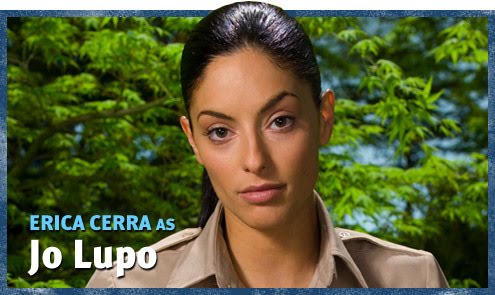
Another less noticed, but still identifiably stereotypical role, appears in the police-procedure genre. Many shows, like Law and Order, Eureka, or the doomed Detroit 187 feature the tough Latina enforcer. While I can’t say for sure, it seems like this version of Latina can find some of its roots in Aliens (1982). That film introduced the memorable character Private Jeanette Vásquez, a tough-as-nails marine. Here was a Latina character who got to do things on screen that had previously been reserved almost exclusively for men, including handling some really big guns. She also met her demise memorably in an altruistic blaze of fire, ultimately hugging a grenade rather than being taken by the titular aliens. Reportedly, the Vásquez character left such an impression on Gene Rodenberry that he intended the security officer on Star Trek: The Next Generation to be a comparable Latina figure (which was later dropped when he cast blond Denise Crosby for the role, contributing to Star Trek’s long history of failing to include Latino/as in the future – but that is another entry).


What I call the “Vásquez type” presents Latinas as figures who bend traditional gender conformity through their military/police skills. They are often presented as invaluable to the white leads in solving crimes, battling aliens, or generally kicking ass. They know their way around a gun, wear their hair in a sensible bob or poneytail, and can more than handle themselves in battle. All of that is nice . . . but these Latina figures are also always ancillary to the main white characters. If they provide the muscle, than it is up to their white (usually male) partner to provide the problem solving skills which truly stops the criminals/aliens/mayhem. Representations of their personal lives range from non-existent to deeply troubled. While generally I appreciate their rejection of gender conformity, it can nonetheless becomes a racial marker that only serves to highlight the more authentic masculinity of the (white) male lead and/or the more alluring femininity of the (white) women around them. Latinas become characters who have not quite mastered the mainstream gender rules, and therefore remain outside of society.


Keep in mind that those are the most positive options currently seen on television. Most of the time, television networks prefer to imagine that Latinos don’t exist at all. Even shows set in geographic areas with significant Latino populations manage to sideline those inhabitants or simply turn them into background “color” that spices up the main white characters’ lives. As I have talked about elsewhere, the USA show Burn Notice takes place in Miami but manages to only grant roles for Cubans as either victims (usually women) or as villains (either men or women). Whatever the case, both are easily dispatched after one episode.

For obvious reasons, I am the most sensitive about this phenomena when programs are set in New Mexico. My home state, as everybody knows, has always had a non-white majority population. Recently, the census bureau also revealed that Latinos are now the largest ethnic group in the land of enchantment. Making a show set in New Mexico without showing Latinos is like making a show set in Washington, D.C. without showing idiots. Nonetheless, that is exactly what happens in USA’s In Plain Sight or the critically acclaimed AMC show Breaking Bad. The first, which centers of the blond lead, has a token Latino character who is a Dominican baseball player. Apparently the USA network could only imagine Latinos as recent immigrants, thereby ignoring the Latinos actually residing in the state whose families have been there for generations.

Breaking Bad, also set in Albuquerque, does little better. Like in Burn Notice, Latinos zest up the drab background by providing Spanish-language music, low-rider cars, or colorful expressions. When they aren't providing the literal and metaphorical salsa, they appear as threats to the main white leads. These roles as side characters serve to contrast the normalcy of the two middle-class white characters. Latinos, as dangerous drug dealers, represent an upending of the “quiet” life of the white school teacher and his former student. The series lead, we are told, had no choice but to enter the drug underground. He begins manufacturing meth in a noble attempt to provide for his family after his imminent death from cancer. Latino drug dealers, on the other hand, are shown to be motivated only by greed and violence with few redeeming characteristics. They are almost always recent arrivals in the country.


I am disappointed that television programming has failed to understand or represent the variety of Latino/a experiences in the United States. This is even more troubling when we consider that many (most?) of the nation’s other citizens probably depend on television as the only venue through which they get to know the United States' largest minority. For the most part, it seems that television executives consider Latinos too much of a political hot potato to represent fairly. When they do make an appearance, they enforce the notion that Latinos (and a multi-cultural society in general) threatens to upend the national status quo through their supposedly hyper sexuality and unquenchable thirst for violence.

Some of this might change when media monopoly Comcast launches its new English-language Latino network in 2012. I’m not holding my breath, though.

Monday, March 07, 2011

Baby Nation

Given that I am a junior faculty member, I sometimes attend professional panels for career advice. Most often, the advice is fairly predictable (e.g. Publish, publish, publish; keep your c.v. updated; don’t sleep with your students; teach well, but don’t let it interfere with publishing; avoid unprofessional journals/presses that take 8 months to decide whether to even send out a piece for review; wear sensible shoes). What emerged during one such recent discussion among distinguished faculty left me gobsmacked. Yeah, that’s right. I used “gobsmacked” in a sentence. American slang just doesn’t have a good enough alternative. Or maybe I have been watching BBC America a wee bit too much.

Whatever the case, there isn’t much that can surprise me about the academic world these days. Like the immortal character of Kelly Garett, I’ve been around. So you might imagine that it took me quite a bit aback when one of the male panelists charged with mentoring junior faculty suggested that the key to maintaining one’s balance and success in the academic realm was having children. He did not present this as one of a menu of options (i.e. “One needs to have focus on things beyond the job, like having children; or a series of romantic relationships; or a pet poodle; or building ships in a bottle.”). Nope, the key was children and the unnameable, but miraculous, power of parenthood to transform an individual to a higher plane of consciousness and zen clarity. Only then would you succeed.


Had he been a lone voice on the panel, it might have seemed a peculiar, but dismissible, comment. Astoundingly, though, the majority of the panel, a mixture of men and women, agreed enthusiastically with him. This was not a panel riddled with Christian fundamentalists. These were some mighty smart people who themselves write about issues of social difference. Yet, they saw few problems with promoting a pretty strict type of conformity (and, I would suggest, unrealistic expectations). Only two dissented with the parent agenda: One who agreed that children was a must for a happy life, but meekly suggested that waiting until after tenure might not be a terrible idea for some people. This left just one panelist who pointed out that: a) Not everybody wants children; b) Not everybody can have children; c) Having children (or not) has little, if anything, to do with the path to tenure or one’s professional identity.

To that, I would have added that such advice intentionally ignores the very serious work and time that parenting requires. It keeps in place the myth that being a parent is all reward and no sacrifice. Or, if there is sacrifice, one hardly notices it. Those who might suggest that parenting is often unrewarded drudgery might as well say that they keep their kids locked in the basement.

The panelists’ advice also veiled the reality that women remain disproportionately responsible for childcare in most households. For junior faculty, it is likely that women's careers will be more impacted than their male counterparts. Looking from the far (FAR) outside, it seems to me that even suggesting that becoming a parent would somehow ease the burdens of a tenure-track career is more than slightly disingenuous. It is a lie.

Finally, this advice is riddled with a particular brand of heterosexist privilege. Let’s pretend that I, GayProf, actually desired a human worm larvae of my own (Which I don’t – Trust me). The chances of me having a baby via sex are pretty slim (but that doesn’t mean I am not willing to keep on trying!). The effort that I would need to expend to obtain said larvae would far exceed all the sweat that went into NERPoD (Currently available for purchase at any of your favorite on-line book stores). States like Arkansas, Utah, and Mississippi even make it illegal or nearly impossible for gay men to adopt, no matter how much money they throw into the system. Along the same lines, many heterosexual couples are unable to have biological children for a variety of reasons. For them, hearing that children is a must for maintaining one’s sanity in the academic profession could only be construed as coming from a source of parental privilege.

This emphasis on parenting occurs despite the economic recession/depression, global hunger, and environmental strain. Rarely do I see any call for U.S. citizens to consider the ethical implications of our parenting choices. Each new human born in the United States will consume 30 times more than a brand new human born in India and 20 times more than a new human in Africa. Given that our nation represents only 5 percent of the world’s population, but consumes 20 percent of its resources, it is hard not to imagine that some consider our nation as giving birth to weapons of massive consumption.


Is this to say that I would argue against having children while untenured? Not really. I actually don’t care. We are lucky to live in an era when becoming a parent is still a choice. I would say such choices should be weighed seriously and with an understanding about the local, national, and global costs of an excessive population. Moreover, if you are with a spouse (or two) who won’t put in equal effort towards the kid, you really should think again about whether you want those spouse(s) around.

This panel, though, reminded me how obsessive our society has become about parenting. It left me thinking that if a group of people who are otherwise committed to questions of social justice could/would generalize so easily, just what has happened that natalism has become the benchmark for an individual’s success? Not since the middle of the twentieth century has parenting become a defining element of one’s place in our society. Much like the 1950s, those who do not have children are imagined as pitiable, selfish, immature, bitter, or simply crazy. As a single gay man with no family plan, I have a problem with that. Moreover, since I spent the larger part of my childhood living in fear of one of my parents, I am not inclined to see the mere act of becoming a legal guardian as necessarily representing an enhancement of one’s moral being. As I have mentioned in other posts, I am disturbed by children’s lack of rights and the assumption that they basically “belong” to their parents.


The career panel was surprising because it was a formal event, but it is not the only place where I have heard such messages. Indeed, I have one colleague at Big Midwestern University whom I see fairly rarely (My department is quite massive). Nonetheless, the few conversations that I have had with him have always centered on his efforts to convince me that I need to have a child. Part of this, I think, is an ingrained tendency that we all have to want other people to make the same choices that we have made. The first conversation seemed fine. After the third, I made a direct statement that I had no desire for children. He nonetheless continued and assured me that I didn't really know what I wanted. While he is generally a nice guy, it started to feel a bit like harassment.

If a single gay man is getting this type of insistence, I can’t possibly imagine what women (of all sexualities) are facing. Unlike the 1970s, where a question might be about whether a woman wanted children, the question is now when a woman will want children. It seems to me that modern feminism has left unchecked the notion that women must be defined through their role within a family. This can be seen across our culture. Popular magazines and blogs obsess about famous women and whether they have a “baby bump.” The professional accomplishments of women actors and singers are sidelined once reporters develop a creepy fixation on the occupancy status of their uteruses. Their goals or success prior to pregnancy, we are told, were just illusions of happiness. Only babies make women truly happy!


Take, for example, the coverage of Oscar winner Natalie Portman. Before she even won the award, at least half of the coverage that I heard focused on her pregnancy rather than, you know, her hard work in the film Black Swan (Personally, I didn’t care for the film, but that is another entry entirely). Her professional identity was swept aside in ways that would never happen for a male actor who was at the same stage of having a child.


One of the problems, then, with the hyper investment in parenting is that it also threatens to return us to some pretty retrograde notions of gender and familial roles. Not only has parenting become compulsory for one’s place in the world, but the choices about parenting are also highly scrutinized and policed. Witness the recent kerfuffle over “Tiger Mommy.” Or ultraconservative Mike Huckabee's accusation that Portman "glamorized” unwed pregnancy. Responding to Portman’s statement that her fiancé had given her “the most wonderful gift [a baby],” Huckabee sputtered, “He didn't give her the most wonderful gift, which would be a wedding ring!” Portman apparently didn't realize that there is still a "natural" order to life when she skipped over that all important wedding.

Compulsory parenthood comes with seem pretty high costs it seems to me. My sexuality will always be at odds with a discourse that asserts that our best potential is realized through replicating ourselves. We should be leery of retuning to an era when biology was destiny and the patriarchal nuclear family reigned supreme.

Saturday, September 05, 2009

Burning and Itching

Huh – It turns out, based on the number of Google hits that I am getting, that a great number of you have “crazy colleagues.” At least one of you seems to have a colleague with a spider in hir hair. Who knew?

Of course, the new semester is upon us. This can mean only one thing: the end of the television summer season.

Longtime readers know that GayProf has two, sometimes overlapping, criteria for watching a television show: a) Does it have camp value and/or b) Does it have a hunky male lead. Usually “b” is the prime mover for me. What can I say? I am shallow, but pretty.

Longtime readers also know that I tend write volumes on television shows. Today is no different. Come to think of it, I am surprised that I have any longtime readers at all.

Given that “b” decides most of my viewing habits, you might imagine that my television selections are often quite low brow. You might also imagine that I watch these shows while in my underwear. You really shouldn’t have such dirty fantasies about GayProf.

More than any other, the basic cable network "USA" has cornered the market on summer-fluff. To borrow Kate Jackson’s comments about Charlie’s Angels, the scripts at USA are so thin that if you tossed one in the air, it would take a week to hit the floor. Something about one of its most popular shows, Burn Notice, seems to bother me.


For those who have higher standards than I do, let me give you Burn Notice’s basic premise. Michael Westen, the lead character played by the hunky Jeffrey Donovan (Remember: “b”), once worked as a spy until he was “burned” (essentially framed for a variety of crimes he did not commit – Or did commit, but it was okay because he committed those crimes on behalf of the good ol’ USA (the nation, not the network – I think)). The show’s major narrative focuses on Michael’s efforts to restore his good name and thus return to the spy world. Until he can do that, he takes on odd jobs of fighting crime within a colorful Miami locale.


The show’s appeal depends upon some fairly standard fantasies about power and heroics. Westen possesses a seemingly unending array of secret talents and abilities. He easily defeats whole armies of gunmen with well-timed punches and carefully crafted verbal zingers. Within fifty minutes, you have a guaranteed serving of [largely vigilante] justice.

So, what’s my problem with Burn Notice? The show veers into some problematic realms in terms of race and gender. Mostly it has to do with its valorization of white-straight men as the best and only hope for the future of the nation. Michael Westen’s heroism can only be construed through the vulnerability of his “clients.” Who are those clients? Disproportionately, they are women and racial minorities (and even especially women of color).

Am I arguing that real white-straight-men never fight on behalf of social justice or that we should never see such a representation? No, obviously not. Nor am I suggesting that executives and producers at USA network are participating in an intentional conspiracy to assure the dominance of the white race. I really have no idea if they are members of the Republican party.

We aren’t talking about real life. We are talking about representations. Who ends up as the main “hero” and who best fits the role of “victim” are entirely shaped by gender and race. And for the USA network, white heterosexuality rules. Let me give you another example. Even though USA’s show In Plain Sight is set in New Mexico, a non-white majority state, the lead character is still a remarkably blond Euro American. Indeed, that show has no Latino characters who are actually from the area (One Latino character does appear, but his origins are clearly not from NM).


Minority roles, when cast at all in USA shows, are most often relegated to side characters who need a good, white character to either save or defeat them (Though it is interesting to note that USA seems to like to cast minority actors to play white characters. Real-life Arab-American Tony Shalhoub plays the titular Monk and Latino James Roday (né James Rodríguez) stars in Psych. More could probably be written about those instances at some later point).

GLBTQ folk basically don’t exist at all on USA. According to the most recent GLAAD report, USA ranked 7 out of 10 in terms of cable networks. Although I will at least grant that Burn Notice mostly avoids the passive-aggressive homophobia found in its sister show Psych.

By making the white-straight-male lead an almost invincible hero in an all-white pantheon, Burn Notice and similar USA shows uphold the notion that white-straight-men are not at all the beneficiaries of institutionalized inequities. Nor is white straight manhood ever figured as a direct exercise of privilege and power. Rather, white-straight-male heroes make “noble sacrifices” to save minorities, women, or weaker white men from less scrupulous (most often foreign in the case of Burn Notice) foes. Being a white-straight-man is a type of burden because only they have the necessarily abilities to solve all the nation’s problems, including those created by other white men.

A typical Burn Notice episode will open with Michael’s newest client describing hir problems. If a woman character, she often does it through tears and with a quaking voice. Michael reassures hir; his mother (played by the seemingly downgraded Sharon Gless) offers them a place to stay; and Michael snaps to work with his team. His clients frequently report that they have been trying to solve their problem for years, but Michael usually has everything tied up over the period of a long weekend. Once the bad guys are secured in jail (or dead), Westen shows his beneficence by never accepting any actual payment for his work. It’s just the cost of being a white-male straight hero.


One typical episode focused on a Latina character, let’s call her “Marta,” who solicited Westen’s help to defeat the evil “South-American” Rufino Cortez. The bad-man Cortez evicted poor Marta’s entire family in order to sell their property to a greedy U.S. corporation. With the team emotionally invested in weak Marta’s problem, Westen devised a plan to defeat Cortez.

After a hard year of dispossessing peasants, Latin-American wannabe dictators apparently like to do nothing better than vacation in Miami. This proves to be a real time saver for Westen. The show, of course, ends with Rufino’s death and, apparently, a swift reordering of the entire political structure of the nameless Latin-American country in question. Marta and similar characters, beyond having a problem that Michael can solve, only appear when the audience needs more exposition. They are otherwise totally powerless in their own lives.

Even women and minorities who one might expect to be Michael’s peers, such as a Latina police officer (“Sophia”) who appeared in the second season, end up being fairly useless. Sophia was so inept at her job that she actually became a stalking victim of the man that she apparently spent years trying to arrest (!). She then had to appeal to Westen to not only help her arrest the drug dealer, retain her job, but also secure her own personal safety. Always chivalrous, Westen even allows her to take credit for the arrest.


Some might suggest that the main character Fiona Glenanne offers a woman character who is potentially Michael’s equal. Fiona, we are told, is an Irish national originally trained by the IRA. She does therefore have elements that push against some traditional gendered stereotypes. Fiona’s expertise on guns and explosives can even surpass Michael Westen’s. She also frequently holds her own in regular fist fights and, on a rare occasion, has rescued the male characters in the show.

Yet, her character’s basic premise is still mired in some pretty traditional gender ideas. Michael’s motives are rooted in lofty ideals and a sense of U.S. patriotism. In contrast, Fiona’s greatest ambitions center on building a romantic relationship with Michael. She actually finds it impossibly difficult to understand his noble aspirations to serve his country. Indeed, we are informed that she only joined the IRA to avenge the death of her sister, not out of any deeper political or nationalist ideology. So, while Michael and Fiona complete the same jobs, her motives are still rooted in traditionally feminine ideals: emotion, family, and an ultimate desire for heterosexual marriage. Michael uses his skills for justice. Fiona uses her skills to help her man. Oh, and by the way, Fiona herself became one of Michael’s “clients” in the end of this past season.


In this way, producers of Burn Notice get to have it both ways. On one hand, they can handle serious social issues like domestic abuse, human trafficking, and the drug trade. On the other hand, they get to divorce those problems from the bigger social structures that keep inequalities in place or from thorny questions about racism, sexism, or U.S. imperialism. They are treated as case-by-case problems that can be solved through the timely intervention of the right white-straight man. In this way, the show ignores the seriously hard work that goes into fighting for social justice. Far from being the work of individuals, it takes entire communities to fight for change.

Burn Notice is hardly unique in this formulation. All sorts of shows have been built around the good white guy who helps the Other. Maybe no other show took this premise to its greatest extreme than the eighties sci-fi clunker Quantum Leap. In that instance, the white-straight-male hero literally coopted the bodies of [white] women, men of color, and (in one memorable episode) a quasi-gay naval cadet. Quantum Leap often literally rewrote the history of civil rights in this nation. Rather than being a product of the hard work of minorities against a disinterested white straight majority, Quantum Leap proposed that white straight men even created the first impetuses for social justice. What minorities really needed was to get a little white-straight man in them before they could really improve their lives. Without white straight men to help them, women, minorities, and gays would have been forever degraded.


It is quite something to be living in a moment when the nation is willing to elect an African American man to lead the nation, but television networks are still frightened about casting a minority to lead an hour-long drama. Perhaps USA should change its slogan to“White Characters Welcome, All Others Enter Through the Back."